
"cycling culture"
300 article(s) found

ONIBUS COFFEE, a popular cafe in Tokyo, shares the golden proportion of hand-brewed coffee.
Exchange of professional baristas Please follow the Coffee Workshop (Wechat official account cafe_style) by setting up a coffee shop to put forward a proposal for a good life in order to promote coffee culture, go to African coffee producing areas to pick beans and choose beans, in a down-to-earth way step by step, and implement his professional-like coffee beliefs. Hiroshi Sakao, who used to work in Paul Bassett, Australia, is fascinated by the local exquisite coffee culture.

Good average quality; aromatic and full-bodied Ethiopian coffee plantation taste characteristics
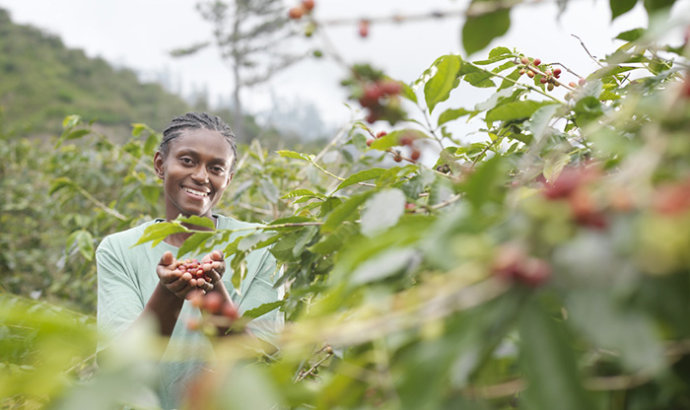
Ethiopian coffee beans grow in a near-natural environment. After years of cultivation under the same growing conditions, Ethiopian coffee beans have gradually adapted to the environment here. More than 60% of coffee beans are forest or semi-forest grown coffee. Coffee farming villages produce about 35 percent of the country's coffee.
The abnormal prosperity of Brazil's "coffee kingdom"
From the early 16th century to the 1820s, Portugal colonized Brazil for more than 300 years. Portugal colonial rule had a profound impact on Brazil's economy, politics, society and culture. Single product system and large estate system became fetters restricting the development of modern Brazil's economy. Due to the incomplete nature of the independence movement, Brazil remained a colony for 100 years after independence.

Introduction of boutique coffee beans in Ethiopia Yega Sheffivoka Coffee Flavor
In July 1991, EGF hosted a national conference with the participation of more than 20 political and ethnic organizations. The meeting adopted the Transitional Charter and elected an 87-member House of Representatives, with EGF Chairman Meles Zenawi as President of the Transitional Government and President of the House of Representatives. A transitional government was established. On May 24, 1993, Eritrea (formerly the province of Eritrea, Ethiopia) adopted

Overview of Ethiopian Coffee
The full name of the Federal Democratic Republic of Ethiopia (formerly known as Abyssinia) is a country located in northeast Africa. English name: The Federal Democratic Republic of Ethiopia, Ethiopia is the country of origin and hometown of coffee. Ethiopia has unique natural conditions suitable for growing all imaginable coffee.

Overview of Ethiopian Coffee
The full name of the Federal Democratic Republic of Ethiopia (formerly known as Abyssinia) is a country located in northeast Africa. English name: The Federal Democratic Republic of Ethiopia, Ethiopia is the country of origin and hometown of coffee. Ethiopia has unique natural conditions suitable for growing all imaginable coffee.

A brief introduction to Coffee Culture in Ethiopia
Sustainable coffee culture Ethiopian coffee beans grow in close to the natural environment, after years of planting under the same growth conditions, Ethiopian coffee beans have gradually adapted to the environment here. More than 60% of coffee beans are grown in forests or semi-forests. The villages that grow coffee in large areas account for about the total amount of coffee produced in the country.

Ethiopian Yega Sheffivoka Coffee Flavor description introduction to the taste of fine coffee beans in the producing area
Located in the most advantaged natural conditions, Ethiopia produces unique high-quality coffee every year. Ethiopia's coffee growing cycle brings the joy of harvest to the country every year. Beautiful white coffee flowers will bloom and bear fruit every year from March to April. Only the reddest and ripe fruits will be selected between September and December.

Introduction to Coffee Culture and Flavor in Ethiopia
Sustainable coffee culture Ethiopian coffee beans grow in close to the natural environment, after years of planting under the same growth conditions, Ethiopian coffee beans have gradually adapted to the environment here. More than 60% of coffee beans are grown in forests or semi-forests. The villages that grow coffee in large areas account for about the total amount of coffee produced in the country.

SoraCity Bangkok Cafe Japanese fresh style Thai Coffee Culture
The E5 station of SoraCity is the farthest, but it will not exceed 2 kilometers. I was completely attracted by the bike on its facade, which was completely Japanese-style, and even the girl in the shop spoke like a mosquito. There were several bicycles and bicycle accessories (but not many) in the shop. Coffee, tea and desserts are served, and there is their small studio about bicycles.

Look at how the "BE+" Coffee + Literary Creative Collection Store plays a new trick on the compound format.
Professional baristas please follow the coffee workshop (Wechat official account cafe_style) BE+, is located in Longhu Hongqiao Tian Street, the eye-catching store logo is enough to attract the attention of the passing crowd. Through the glass curtain wall along the street, the four letters of ABCD stood out. It is undoubtedly narrow to use a coffee shop to define a BE+, that contains art, urban cycling, coffee and design at the same time. This space.

A brief introduction to the History and Culture of the Origin and Development of Fine Coffee beans in Ted Manor
Located in the most advantaged natural conditions, Ethiopia produces unique high-quality coffee every year. Ethiopia's coffee growing cycle brings the joy of harvest to the country every year. Beautiful white coffee flowers will bloom and bear fruit every year from March to April. Only the reddest and ripe fruits will be selected between September and December.

Coffee and numbers?
The life cycle of coffee trees is about 50 years. There are 73 coffee varieties, but only two are widely used. The oldest and finest varieties of Arabica (Arabica) and Roberta Arabica coffee are Typica (Arabica) and Bourbon (Bourbon). There are about 2250 ships engaged in coffee bean transportation around the world. There are more than 200 varieties of Arabica coffee
The rise of "University Cafe" Culture
A part-time girl told the reporter that she was not paid for a part-time job in a cafe in order to learn how to brew all kinds of coffee and drinks and how to run and manage a coffee shop.

How about Vietnamese coffee?
Following Cafe Review (Wechat official account vdailycom) found that the representative products of Vietnamese coffee are MOOSSY Coffee, TRUNGNGUYEN Coffee, SAGOCAFE Coffee and HIGHLANDS Coffee. Mo's Coffee selected one of the top ten coffee bean producers in the world, Vietnam Bang Mei Shu Gao.

Vietnamese Coffee with strong Flavor description of Grinding degree and Taste characteristics of Fine Coffee
There are two kinds of places to drink coffee in Vietnam, one is high-end coffee shop, the other is open-air seating by the side of the road, and the price is also very different. In an open-air seating, you can enjoy delicious and pure Vietnamese coffee for two yuan, while in a high-end coffee shop, it costs 25 to 30 yuan. High-end cafe, luxurious decoration, including small bridge and flowing water, music performances
Which Vietnamese coffee brands are the coffee products represented by Vietnam?
The representative products of Vietnam Coffee are MOOSSY Coffee, Central Plains Coffee (TRUNGNGUYEN), Saigon Coffee (SAGOCAFE) and Highland Coffee (HIGHLANDS). Morse Coffee is made from Arabica and Robusta coffee beans from the Pang Mei Shu Plateau of Vietnam, one of the top ten coffee producing areas in the world.

What are the brands of Vietnamese coffee? the representative products of Vietnamese coffee
Following Cafe Review (Wechat official account vdailycom) found that Beautiful Cafe opened its own shop in Vietnam Coffee which brands have Central Plains Coffee and Taiyuan Tea. There are two forms of Zhongyuan coffee: coffee powder and instant coffee. The G7 is an instant brand under the Central Plains, with a cappuccino flavor. But what the Vietnamese drink most is brewed with coffee powder.

A brief introduction to the History and Culture of the Origin and Development of Coffee beans in Harald Moka Manor in Ethiopia
Ethiopia has unique natural conditions suitable for growing all imaginable varieties of coffee. As a highland crop, Ethiopian coffee beans are mainly grown in areas between 1, 100 and 2300 meters above sea level, roughly distributed in southern Ethiopia. Deep soil, well drained soil, weakly acidic soil, laterite and soil are soft and contain

Ethiopian Coffee Manor Culture introduces Flavor
Coffee Culture Coffee beans in Ethiopia grow in close to the natural environment. After years of planting under the same growth conditions, Ethiopian coffee beans have gradually adapted to the environment here. More than 60% of coffee beans are grown in forests or semi-forests. Large-scale coffee-growing villages account for about 35% of the country's total coffee production.